Cataract Service

Cataract Services

Cataract Surgery in Delhi

Cloudy vision made clear again. Stitch-free, day-care cataract surgery at Neera Eye Centre, Darya Ganj — with lens options that can also reduce how much you depend on glasses afterwards.

+91 8448448417
Cataract Surgery in Delhi at Neera Eye Centre, Delhi

Day care

Home the same day

15–20 min

Time in the operation theatre

80,000+

Phaco surgeries by Dr. Neera Agrawal

Premium lenses

Trifocal, EDOF and toric options

Written by Dr. Neera Agrawal

Medical Director and Chief Eye Surgeon, Neera Eye Centre & Laser Vision Pvt. Limited. LASIK, cataract and cornea transplant. 36+ years in practice. Fellow of L.V. Prasad Eye Institute, Hyderabad. Pioneer of Excimer and LASIK in Delhi. Senior Consultant, Max Hospital.

Full profile

Published 3 October 2026 · Last reviewed 3 October 2026 · Medically reviewed by Dr. Neera Agrawal

Why you can trust this page

Where this information comes from

The surgical descriptions, recovery timelines and lens guidance on this page reflect how cataract surgery is performed at Neera Eye Centre, Darya Ganj, by a surgeon who has completed more than 80,000 phacoemulsification procedures over 36 years of practice.

The prices listed are our own current composite package rates, not an industry average. The recovery timeline describes a routine, uncomplicated case; eyes with diabetes, glaucoma, a dense long-standing cataract or previous eye surgery can follow a different course, and your surgeon will tell you if yours is one of them.

Where opinion genuinely differs between surgeons — particularly on premium lenses — this page says so rather than presenting one view as settled.

Service Overview

What a cataract is, and what we do about it

What is cataract surgery?

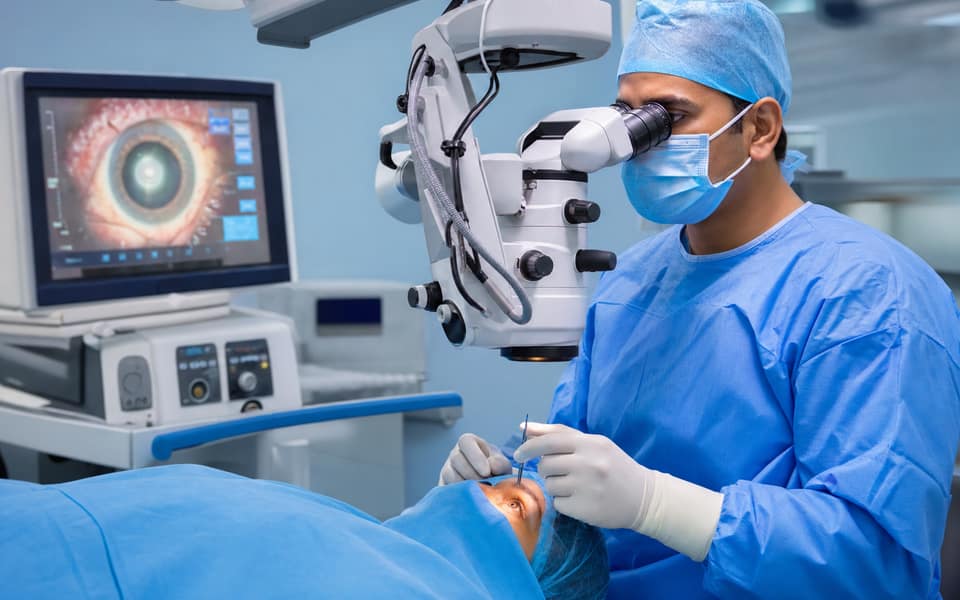
Cataract surgery removes the clouded natural lens of the eye and replaces it with a clear artificial lens called an IOL. At Neera Eye Centre it is a day-care procedure taking 15 to 20 minutes, performed through a 2mm opening that seals without stitches. Most patients go home the same day.

A cataract is when the natural lens inside your eye slowly turns cloudy. Light can no longer pass through it cleanly, so everything starts to look faded, hazy or doubled.

You probably noticed it slowly. Reading small print got harder. Colours started looking dull and whites started looking yellow. Driving at night became uncomfortable because headlights spread into a glare. Your glasses power kept changing, but nothing ever felt properly sharp again.

There is no eye drop, medicine or exercise that clears a cataract. Surgery is the only treatment — and it is one of the safest and most commonly performed operations in the world.

At Neera Eye Centre in Darya Ganj, cataract surgery is a day-care procedure. The cloudy lens is removed through an opening so small it seals on its own without stitches, and a clear artificial lens (called an IOL) is placed in its position. You come in the morning and you go home the same day.

Symptoms

Signs that point to a cataract

Cataracts develop gradually, which is why most people adjust to them without realising. These are the changes worth getting checked.

Cloudy or milky vision

Everything looks slightly veiled, as though you are looking through a smeared window.

Blurring new glasses cannot fix

Your power changes every few months but no prescription gives you a clean, sharp line.

Halos around lights

Headlights and streetlights spread into bright rings, making night driving uncomfortable.

Glare sensitivity

Bright sunlight or oncoming headlights feel harsh and wash out what you are looking at.

Double vision in one eye

A single object appears doubled even when the other eye is closed.

Faded or yellowed colours

Whites look cream, and colours that once looked vivid seem dulled down.

Causes

What causes a cataract

Ageing

The most common cause. Proteins in the lens break down and clump over time.

Diabetes

Long-standing high blood sugar accelerates clouding, often at a younger age.

Long-term steroid use

Oral or inhaled steroids taken over years can trigger a posterior subcapsular cataract.

UV exposure

Years of unprotected sunlight exposure add to the lens damage that causes clouding.

Eye injury or past surgery

Trauma or earlier intraocular surgery can lead to a cataract forming sooner.

Smoking

Smoking is a well-established and independent risk factor for earlier cataract.

A cataract cannot be reversed by drops, diet, exercise or a change in glasses. Once the lens has clouded, replacing it is the only treatment that restores clear vision.

What It Covers

What your cataract treatment includes

Complete pre-surgery eye check-up

A dilated examination and slit-lamp check to confirm the cataract and rule out other problems like glaucoma or retinal disease.

Lens power measurement

Precise scans of your eye so the new lens is calculated for the sharpest possible vision — not an approximation.

Choosing your lens, with you

Monofocal, toric, EDOF, trifocal. We explain what each one actually does in daily life and what each one costs, so you make the decision — not us.

Stitch-free surgery

The cloudy lens is removed and the new one placed through a micro-opening that closes naturally. No stitches, no injection, no bandage in most cases.

Follow-up care

Scheduled visits to check your vision, eye pressure and lens position until your sight settles fully.

Who It Is For

You may be ready for surgery if

Cloudy or faded vision

Colours look dull, whites look yellowish, and text seems washed out even with a new pair of glasses.

Glare and halos at night

Headlights and streetlights spread into bright rings, and driving after dark starts to feel unsafe.

Glasses that no longer help

Your power keeps changing every few months, but no prescription gives you a clear line anymore.

Techniques

Types of cataract surgery at Neera Eye Centre

All four techniques remove the cloudy lens and replace it with an IOL. What changes is how the opening is made and how much of the procedure is computer-guided.

Micro incision (phaco)

The standard modern technique. A 2mm manual opening, ultrasound to soften the lens, no stitches.

Femto / bladeless

A femtosecond laser makes the opening and softens the lens, so no blade is used at any stage.

AI assisted

Scan measurements pass digitally to the surgical platform, removing manual transcription of numbers.

Robotic

Computer-guided steps for the highest precision in incision placement and lens positioning.

Micro incision (phaco)

Opening made by
Surgeon, manually
Blade used
Yes, micro-blade
Typical theatre time
15–20 min
Stitches
None

Femto / bladeless

Opening made by
Femtosecond laser
Blade used
No
Typical theatre time
15–20 min
Stitches
None

AI assisted

Opening made by
Surgeon, digitally guided
Blade used
Yes, micro-blade
Typical theatre time
15–20 min
Stitches
None

Robotic

Opening made by
Computer-guided laser
Blade used
No
Typical theatre time
15–20 min
Stitches
None

Lens options

Choosing your lens

The lens you choose matters more to your daily vision than the technique does. Here is what each one actually gives you.

Monofocal

Sharp vision at one fixed distance, usually far. You will need reading glasses. The most affordable option and still an excellent one.

Toric

Corrects astigmatism alongside distance vision. Worth it if your cylindrical power is significant, otherwise unnecessary.

EDOF

Extends the range of focus so distance and intermediate — a laptop, a dashboard — are both usable. Fine print may still need glasses.

Trifocal

Distance, intermediate and near. The best chance of being glasses-free for most tasks. Some people notice halos at night in the early weeks.

Monofocal

Distance
Yes
Intermediate
Limited
Near
No
Corrects astigmatism
No
Glasses after surgery
For reading

Toric

Distance
Yes
Intermediate
Limited
Near
No
Corrects astigmatism
Yes
Glasses after surgery
For reading

EDOF

Distance
Yes
Intermediate
Yes
Near
Partial
Corrects astigmatism
Toric version available
Glasses after surgery
Occasionally for fine print

Trifocal

Distance
Yes
Intermediate
Yes
Near
Yes
Corrects astigmatism
Toric version available
Glasses after surgery
Rarely

Cost

Cataract surgery cost in Delhi

How much does cataract surgery cost in Delhi?

At Neera Eye Centre, Darya Ganj, cataract surgery costs between ₹19,000 and ₹1,40,000 per eye as a composite package. Monofocal lenses start at ₹19,000, advanced monofocal and toric from ₹50,000, EDOF from ₹60,000 and trifocal from ₹65,000. The lens you choose moves the figure most.

The price is quoted per eye, as a single composite package rather than a list of separate charges. The range within each lens category reflects the specific lens model, whether astigmatism correction is needed, and the complexity of your eye.

Monofocal IOL

What it gives you
Sharp distance vision. Reading glasses needed.
Cost per eye
₹19,000 – ₹45,000

Advanced monofocal IOL

What it gives you
Distance vision with better contrast and night quality.
Cost per eye
₹50,000 – ₹65,000

Toric IOL

What it gives you
Distance vision with astigmatism corrected at the same time.
Cost per eye
₹50,000 – ₹65,000

EDOF IOL

What it gives you
Distance and intermediate. Fine print may need glasses.
Cost per eye
₹60,000 – ₹1,10,000

Trifocal IOL

What it gives you
Distance, intermediate and near. Least glasses dependence.
Cost per eye
₹65,000 – ₹1,40,000
Lens categoryWhat it gives youCost per eye
Monofocal IOLSharp distance vision. Reading glasses needed.₹19,000 – ₹45,000
Advanced monofocal IOLDistance vision with better contrast and night quality.₹50,000 – ₹65,000
Toric IOLDistance vision with astigmatism corrected at the same time.₹50,000 – ₹65,000
EDOF IOLDistance and intermediate. Fine print may need glasses.₹60,000 – ₹1,10,000
Trifocal IOLDistance, intermediate and near. Least glasses dependence.₹65,000 – ₹1,40,000

Composite package rates per eye at Neera Eye Centre & Laser Vision Pvt. Limited, Darya Ganj, current as of October 2026. Your exact figure is confirmed in writing at consultation, after your scans.

What the package covers

The composite package is a single all-in figure for that eye. It covers the surgeon's fee, the intraocular lens itself, operation theatre and day-care charges, the pre-operative scans used to calculate your lens power, and your scheduled post-operative follow-up visits.

Costs outside the package are told to you upfront: the initial consultation, treatment for any separate eye condition found during examination, and the second eye, which is quoted as its own package.

What changes the price

Four things move the figure: the lens category you choose, whether you need astigmatism correction, the surgical technique used, and whether you are having one eye or both done.

How It Works

On the day of your surgery

1

Numbing drops

Only drops. No injection and no needle in most cases. You stay awake and comfortable throughout.

2

A tiny opening

The surgeon makes an opening of about 2mm at the edge of the cornea. It is small enough that it does not need a single stitch.

3

The cataract is removed

A fine probe softens the cloudy lens using gentle ultrasound and draws it out cleanly.

4

The new lens goes in

Your chosen lens is folded, passed through the same tiny opening, and opens up into position inside the eye.

5

Rest, then home

After a short observation and a final check, you go home the same day with an eye shield and your drop schedule.

Before and after

Preparing for surgery, and recovering from it

How long does it take to recover from cataract surgery?

Most patients see a clear improvement within 24 to 48 hours and return to desk work within a week. Vision continues sharpening for two to four weeks as the eye settles. Eye drops continue for about four weeks, and a final glasses prescription is usually taken after that.

In the days before

Biometry scans to calculate your lens power. Antibiotic drops started a few days ahead. A review of blood thinners and diabetes medication with your physician. Light food only on the morning of surgery, and someone arranged to bring you home.

In the weeks after

A tapering drop schedule for about four weeks. A protective shield at night. Mild grittiness and watering in the first two days is normal. Avoid rubbing the eye, swimming, dusty sites and heavy lifting.

Day 0

What to expect
Blurred vision, mild watering, eye shield on
What you can do
Rest at home

Day 1–2

What to expect
Noticeable improvement in clarity
What you can do
Read, watch TV, walk; first follow-up visit

Week 1

What to expect
Vision settling, drops continuing
What you can do
Return to desk work and light routine

Week 2–4

What to expect
Vision stabilising
What you can do
Resume exercise after clearance; second eye can be scheduled

Week 4+

What to expect
Final vision settled
What you can do
Glasses prescription taken if needed

Watch

Patient videos

Patients and our surgeons talk about care at Neera Eye Centre. Use the arrows to move through the videos.

Eye Surgeon | Eye Specialist In Delhi, India

Video 1 of 4

Timing

When should you have cataract surgery?

There is no need to wait for a cataract to “ripen”. That advice belongs to an older generation of surgery. The right time is when the cloudiness starts interfering with something you need to do — reading, driving at night, recognising faces, working, or managing stairs safely.

There is one reason not to delay indefinitely. A cataract left for many years hardens, which makes the surgery itself longer and slightly riskier. If your ophthalmologist tells you the lens is advanced, that is a clinical reason to act rather than a sales one.

Why Choose Us

Experience, where it matters most

Cataract surgery is the most routine thing we do — which is exactly why experience matters here. Dr. Neera Agrawal has performed more than 80,000 phaco surgeries and was among the first surgeons in Delhi to adopt phacoemulsification. Your scan measurements are transferred digitally to the surgical equipment, so no one is copying numbers by hand. Before anything is scheduled, you get a clear written estimate: which lens options suit your eye, what each one will and won't do for you, and what each one costs.

Your surgical team

The surgeons who will treat you

Dr. Neera Agrawal

M.S. Ophthalmology · Fellow, L.V. Prasad Eye Institute. Pioneer in phaco and cataract surgery in Delhi, 36+ years of surgical experience.

Dr. Amit Gupta

MBBS, MD (Ophthalmology). Senior Squint Specialist trained at RP Centre, AIIMS New Delhi, with 33+ years in ophthalmology.

Dr. Suneel Kumar

MBBS, MS – Ophthalmology. Vitreoretinal and cataract surgeon with 14 years of experience, including retina surgery, injections and lasers.

Gallery

Inside the hospital

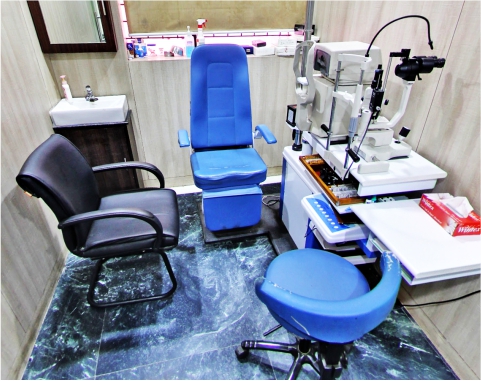
Consultation room at Neera Eye Centre, Darya Ganj, Delhi
Consultation room
Neera Eye Centre hospital interior in Darya Ganj, Delhi
Inside the hospital
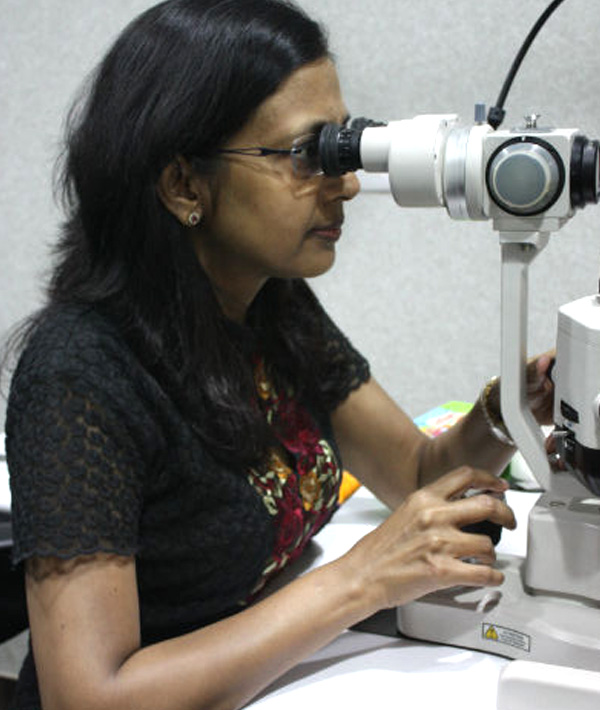
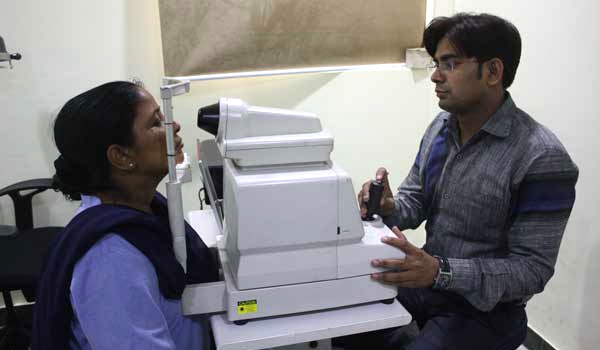
Eye examination at Neera Eye Centre, Delhi
Eye examination
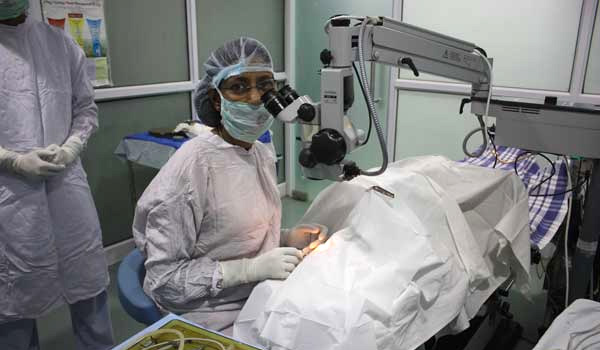
Ophthalmology facility at Neera Eye Centre, Delhi
Our facility
See the photo gallery

Patient stories

What patients say after surgery

Patients describe how cataract surgery changed everyday tasks such as reading, driving and recognising faces. Their accounts are on the patient stories page.

Read patient stories

From our Google profile

See us on Google

Neera Eye Care Hospital is rated 4.7 on Google, from 243 reviews.

4.7

out of 5 · 243 Google reviews

Shivam Dhama

3 months ago

I recently underwent Topography-guided PRK (Contoura) surgery here, and my experience was absolutely fantastic. I had a high cylindrical power (-3.25) and was honestly a bit nervous, but Dr. Neera agrawal and the entire staff made me feel completely at ease. They took the time to explain exactly why PRK was the safest and best option for me. The procedure was incredibly smooth, and my recovery is going exactly as they guided. The hospital is exceptionally clean, the staff is very cooperative, and the technology is top-notch. If you are considering getting rid of your glasses, I highly recommend dr. Neera and this hospital. Thank you for giving me a glass-free life!

Review 1 of 6

View our Google profile

Frequently Asked Questions

Questions patients ask us

When to call us immediately

Signs that need urgent attention after surgery

Recovery is usually uneventful. Contact us on +91 8448448417 the same day, or go to the nearest eye casualty if you cannot reach us, if you notice any of the following.

Vision getting worse

Sight that was improving and then declines, rather than continuing to sharpen.

Increasing pain

Pain that builds rather than settles, especially with nausea or vomiting.

Growing redness

Redness that spreads or deepens after the first two days.

Discharge from the eye

Any thick or coloured discharge, as opposed to mild watering.

A sudden shower of floaters

A burst of new black spots, or flashes of light, or a shadow across your field of vision.

Severe light sensitivity

Light that becomes painful rather than merely uncomfortable.

Disclaimer. This page is general information about cataract surgery and does not replace a consultation. It is not a diagnosis, and it does not recommend a treatment for your eyes. Outcomes, recovery and suitability for any lens differ from patient to patient and can only be assessed on examination. Prices are current composite package rates and are subject to change; your figure is confirmed in writing at consultation. Please consult a qualified ophthalmologist about your own eyes.

Enquire

Book a cataract consultation

Tell us a little about your vision and the team will call you back to fix a time.

Chat on WhatsApp

Not sure which treatment is right for you?

Book a comprehensive eye evaluation. Our specialists will recommend the best course of action for your vision.

Find Us

Visit Neera Eye Centre

B-99, Bharat Ram Road, Opp. Commercial School, Darya Ganj, New Delhi – 110002, India

Darya Ganj, central Delhi — easy access for local and international patients.

Map
Street View