
Medical Insights & Eye Health
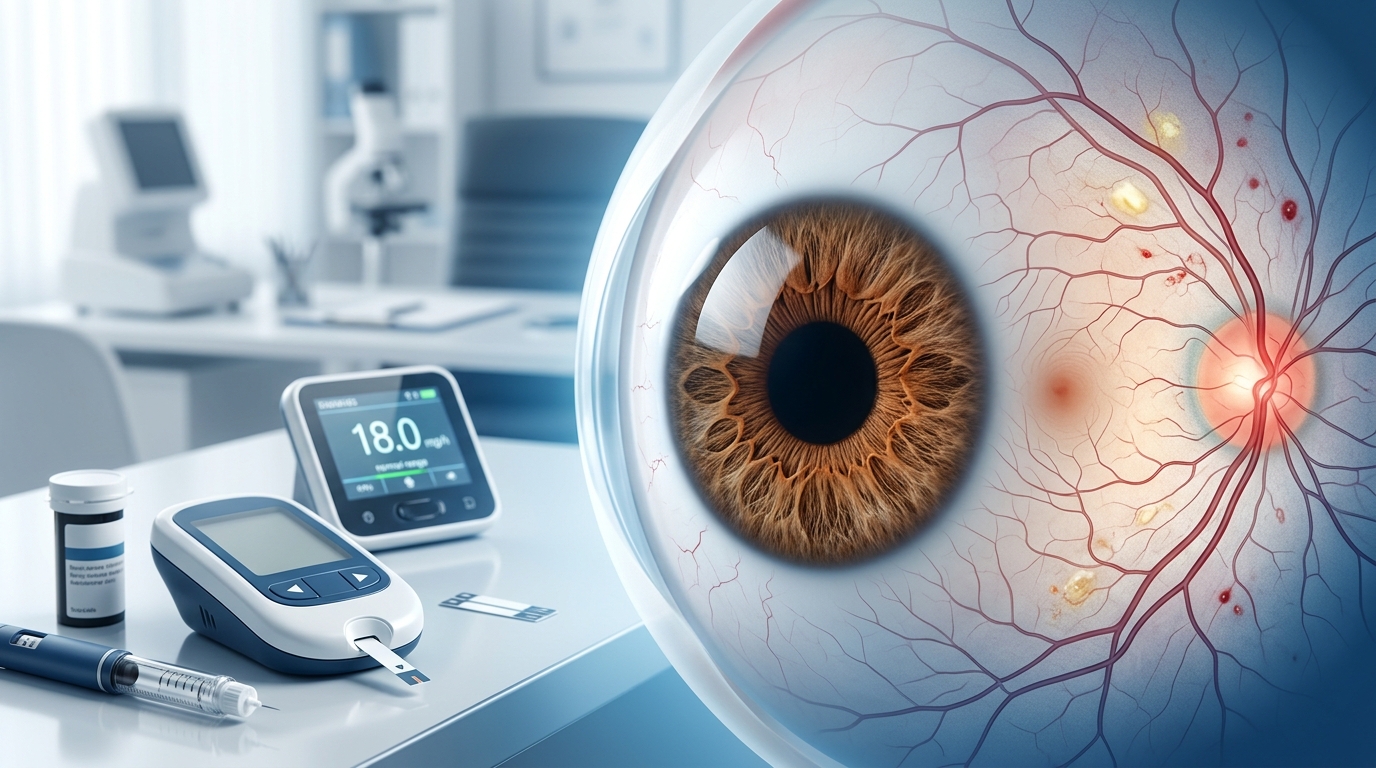
Diabetic Eye Disease: How Diabetes Can Affect Your Vision
Diabetic Eye Disease: How Diabetes Can Affect Your Vision
Managing blood sugar is usually framed around energy, weight, and heart health, but diabetic eye disease deserves just as much attention, since it is one of the leading causes of preventable vision loss in adults. The tricky part is that diabetes and eye problems often develop silently, with no noticeable symptoms until real damage has already occurred.
What Counts as Diabetic Eye Disease
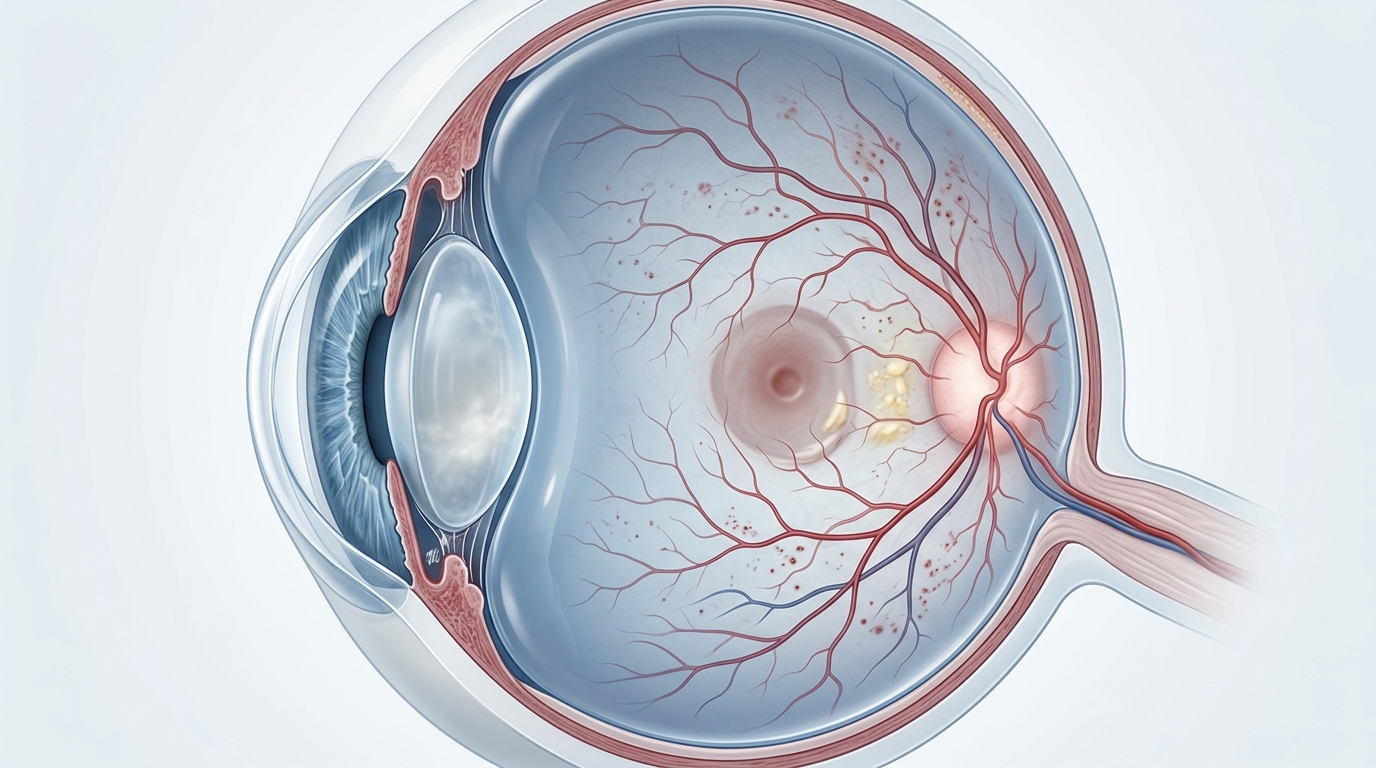
Diabetic eye disease is an umbrella term covering several eye conditions that people with diabetes are at higher risk for, largely because prolonged high blood sugar damages small blood vessels throughout the body, including those in the eye.
Condition | What It Affects |
|---|---|
Diabetic retinopathy | Damage to blood vessels in the retina |
Diabetic macular edema | Swelling in the macula, the retina's central vision area |
Cataracts | Clouding of the eye's natural lens, occurs earlier and more often in diabetics |
Glaucoma | Increased eye pressure that can damage the optic nerve |
While all four fall under diabetes affecting eyesight, diabetic retinopathy and diabetic macular edema are the conditions most specific to diabetes itself.
Diabetic Retinopathy Symptoms
One of the most searched terms on this topic is diabetic retinopathy symptoms, and the honest answer is unsettling, early stages usually have no symptoms at all. Vision can remain completely normal even as damage to the retinal blood vessels begins. This is exactly why routine screening matters more than waiting for warning signs.
When symptoms do appear, they typically include:
Blurred vision that comes and goes
Increased floaters or dark spots drifting across your field of vision
Dark or empty areas in your vision
Difficulty seeing well at night
Colors appearing faded or washed out
A sudden, noticeable drop in vision, which requires urgent attention
The Stages of Diabetic Eye Problems
Diabetic retinopathy progresses through recognized stages, and understanding them helps explain why early detection changes the outcome so significantly.
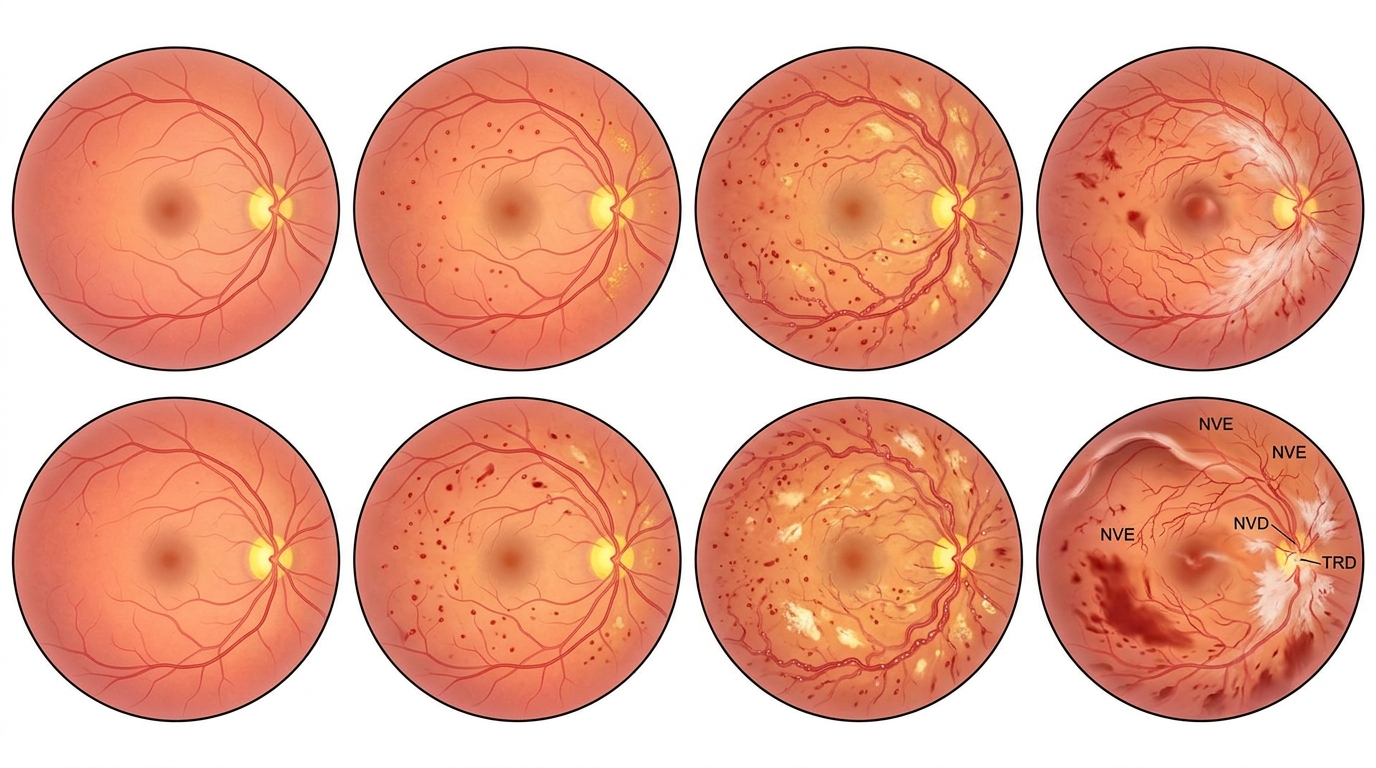
Mild nonproliferative retinopathy, small bulges called microaneurysms form in the retina's tiny blood vessels. No treatment is usually needed at this stage beyond monitoring and blood sugar management.
Moderate nonproliferative retinopathy, more blood vessels become blocked, and swelling may begin to affect the macula.
Severe nonproliferative retinopathy, a larger number of blood vessels are blocked, depriving parts of the retina of blood supply and triggering the body to attempt to grow new vessels.
Proliferative diabetic retinopathy, the most advanced stage, where fragile new blood vessels grow on the retina's surface. These vessels can bleed into the eye or lead to scar tissue that pulls on the retina, both of which threaten vision seriously.
Diabetic macular edema can develop at any of these stages when fluid leaks into the macula, and it is actually the most common cause of vision loss in people with diabetic eye disease, more so than the advanced proliferative stage itself.
Diabetic Retinopathy Treatment Options
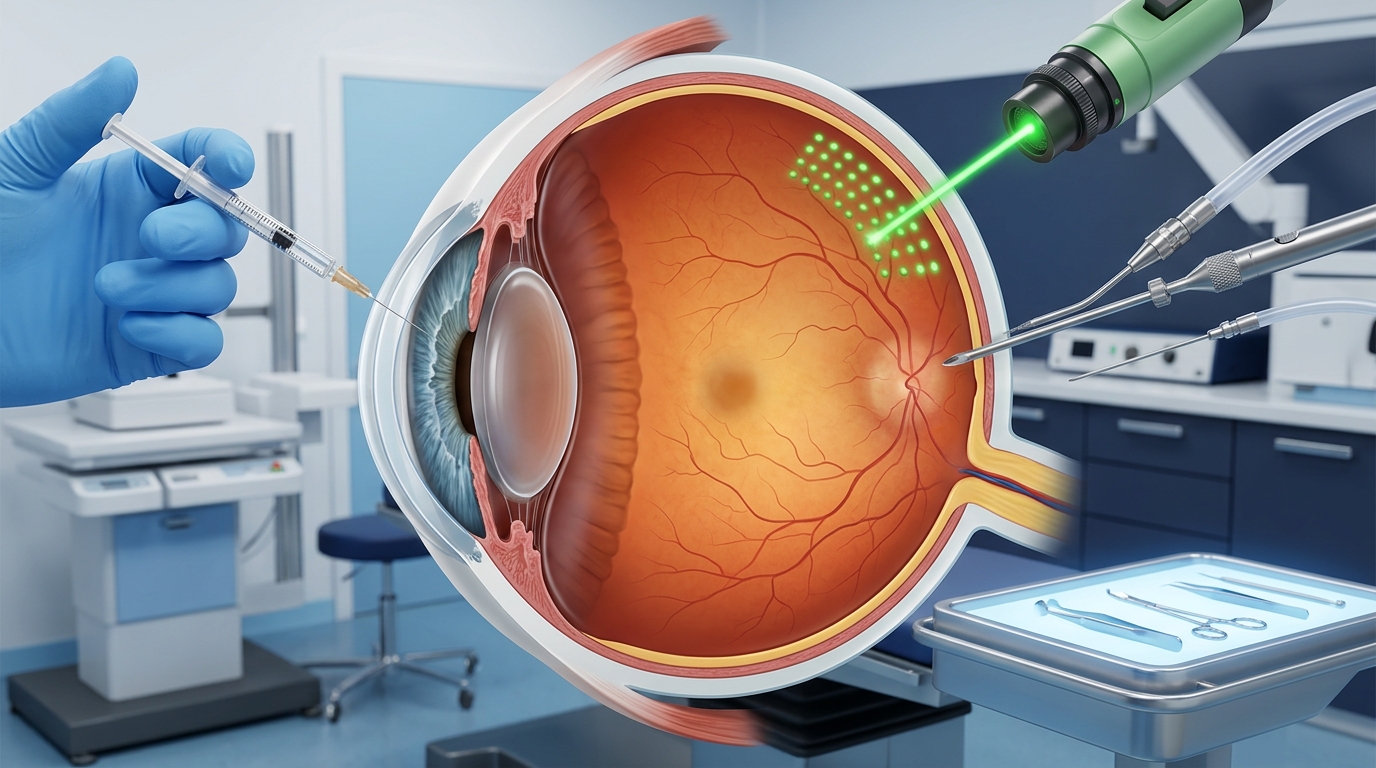
Diabetic retinopathy treatment depends heavily on which stage the disease has reached.
In the earliest stages, treatment often focuses on blood sugar control, along with managing blood pressure and cholesterol, since these directly influence how quickly the condition progresses.
Once macular edema develops, treatments can include injections of medication directly into the eye to reduce swelling and abnormal blood vessel growth, or targeted laser treatment.
In proliferative diabetic retinopathy, laser surgery is commonly used to shrink abnormal blood vessels and reduce the risk of bleeding.
In more advanced cases involving significant bleeding or scar tissue, a surgical procedure called a vitrectomy may be needed to remove blood and scar tissue from inside the eye.
The earlier treatment begins, the more effective it tends to be, which is a major reason eye care professionals emphasize regular screening over waiting for symptoms.
Diabetes and Vision Loss: Why Routine Screening Matters
The connection between diabetes and vision loss is strong enough that major eye health guidelines recommend a dilated eye exam at least once a year for anyone with diabetes, regardless of how their vision feels day to day. During this exam, an eye care professional uses drops to widen the pupil, allowing a clear view of the retina and any early blood vessel changes long before they would ever be noticeable to the patient.
This single habit, an annual dilated eye examination, is one of the most effective tools available for catching diabetic eye disease early enough to prevent serious vision loss.
Who Is at Higher Risk
While anyone with diabetes can develop eye complications, certain factors increase the risk.
Long duration of diabetes, since risk increases the longer someone has had the condition
Poor blood sugar control over time
High blood pressure or high cholesterol
Pregnancy, which can accelerate changes in existing diabetic retinopathy
Smoking
Managing these factors alongside regular eye screening gives the best chance of catching problems while they are still easily treatable.
Conclusion
Diabetic eye disease develops quietly, often without symptoms until damage has already progressed, which makes it one of the more deceptive complications of diabetes. Understanding the stages, from mild nonproliferative changes to the more serious proliferative stage and diabetic macular edema, highlights exactly why annual dilated eye exams matter so much, even when vision feels completely normal. Combined with steady blood sugar, blood pressure, and cholesterol management, consistent screening remains the most reliable way to protect vision over the long term for anyone living with diabetes.
FAQ