
Why “minimally invasive”
Shorter surgery, less tissue dissection, and usually no large conjunctival bleb.
Glaucoma Surgery
Glaucoma Surgery
A smaller-incision way to protect the optic nerve — less disruption than traditional filtration, with a faster, more predictable recovery.
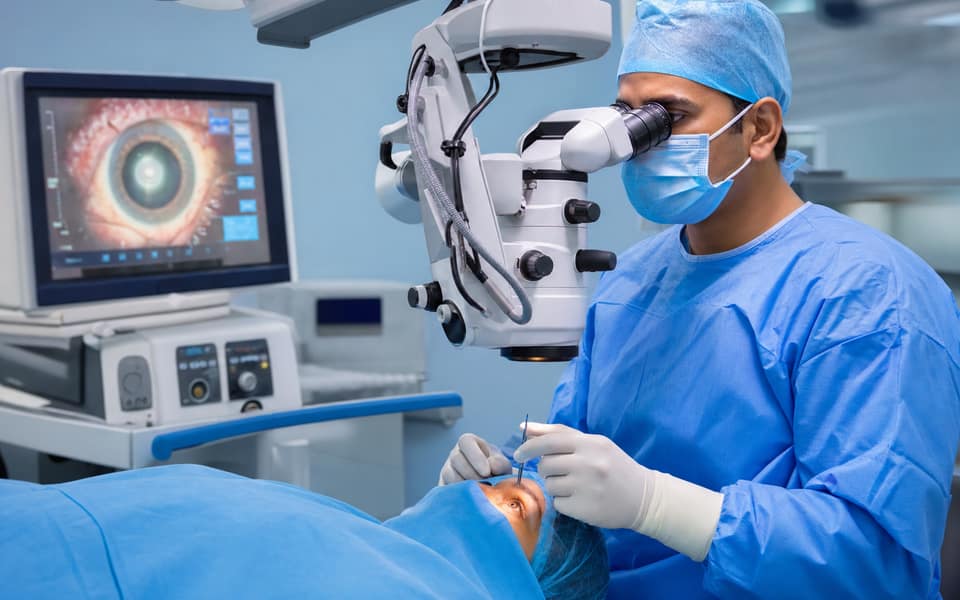
Small cut
Micro-incision approach
Faster
Quicker visual recovery
Safer floor
Lower risk of very low IOP
Lifestyle
Fewer lifelong drop bottles for many
Service Overview
Minimally invasive glaucoma surgery is the full name for MIGS: operations that lower intraocular pressure through tiny openings instead of a large guarded filter. The idea is to reduce the burden of drops and protect remaining nerve fibres while keeping recovery closer to modern cataract surgery than to classic trabeculectomy. It is not for every stage of glaucoma — advanced, rapidly progressing, or very high-pressure eyes may still need trabeculectomy — but for many people it is the first surgical step after medicines and laser.
What It Covers
Why “minimally invasive”
Shorter surgery, less tissue dissection, and usually no large conjunctival bleb.
Pressure and drop reduction
Aims to reach a safer IOP and cut the number of daily glaucoma medicines.
When it is not enough
Severe field loss or very high pressure may still need trabeculectomy.
After-care
Steroid and antibiotic drops, pressure checks, and continued field/OCT monitoring.
Who It Is For
Open-angle glaucoma that is progressing despite drops, but not end-stage.
Those who cannot take a long bleb-care course after trabeculectomy.
When lens surgery is already planned and a glaucoma step can be added.
How It Works
We explain expected pressure drop, remaining drop need, and trabeculectomy as a backup.
Under local or topical anaesthesia the chosen MIGS device or canal procedure is done.
Pressure, field, and OCT visits continue; further surgery is offered only if needed.
Why Choose This Surgery Here
You see the same glaucoma pathway from Field OCT through MIGS or trabeculectomy. That means minimally invasive surgery is offered when it fits — not as a one-size operation, and not withheld when a filter is safer.
Frequently Asked Questions
Many people return to desk work in a few days. Heavy lifting and eye rubbing are restricted until your surgeon clears you.
The eye is numbed. Mild scratchiness for a day or two is common; severe pain is not expected.
No. It is a step on the ladder. If the nerve still needs a larger pressure drop, trabeculectomy remains an option.
Book a comprehensive eye evaluation. Our specialists will recommend the best course of action for your vision.
B-99, Bharat Ram Road, Opp. Commercial School, Darya Ganj, New Delhi – 110002, India
Darya Ganj, central Delhi — easy access for local and international patients.