
Medical Insights & Eye Health
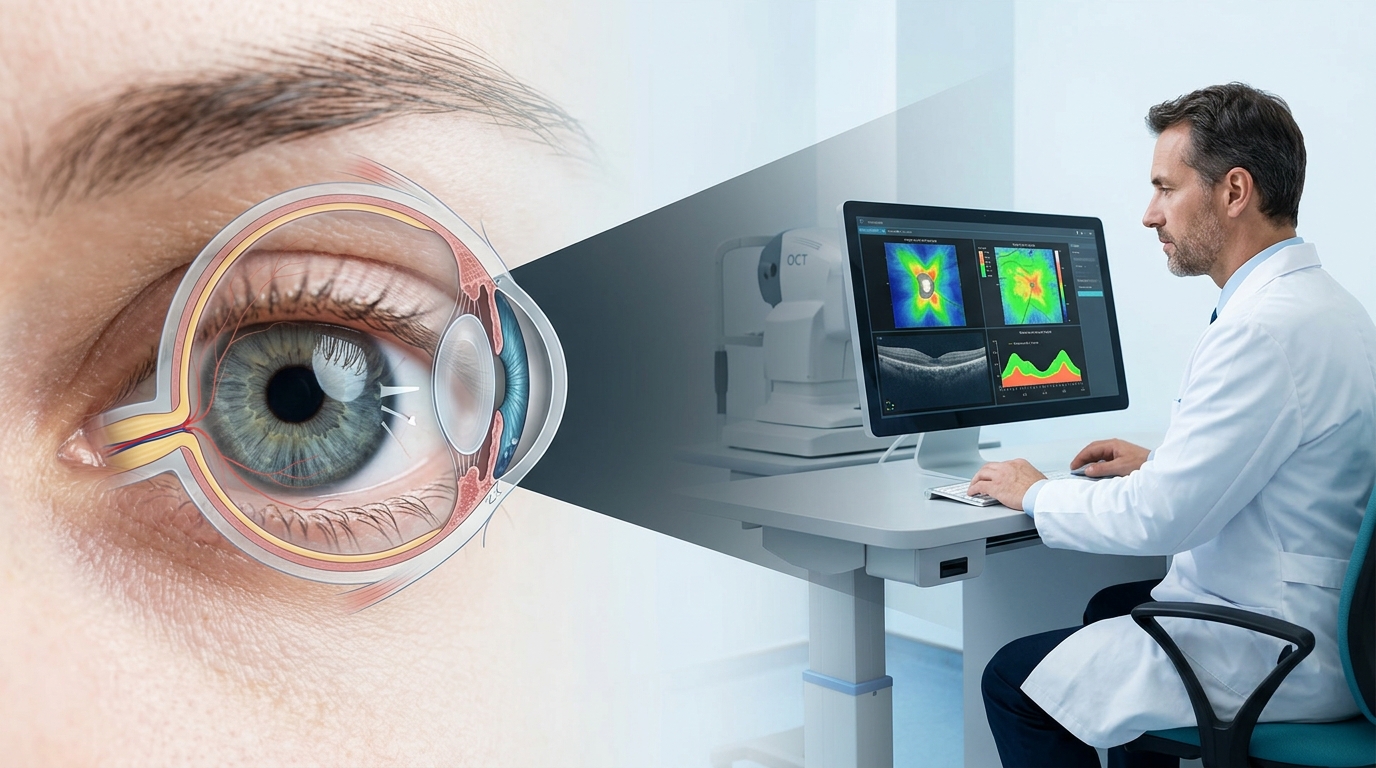
Glaucoma, Early Symptoms, Risk Factors, Diagnosis and Treatment
Glaucoma, Early Symptoms, Risk Factors, Diagnosis and Treatment
Glaucoma has earned the nickname "the silent thief of sight," and for good reason. Most people search glaucoma symptoms only after a routine eye exam flags a concern, because in its most common form, this disease causes almost no noticeable warning signs until meaningful vision has already been lost.
What Glaucoma Actually Does to the Eye
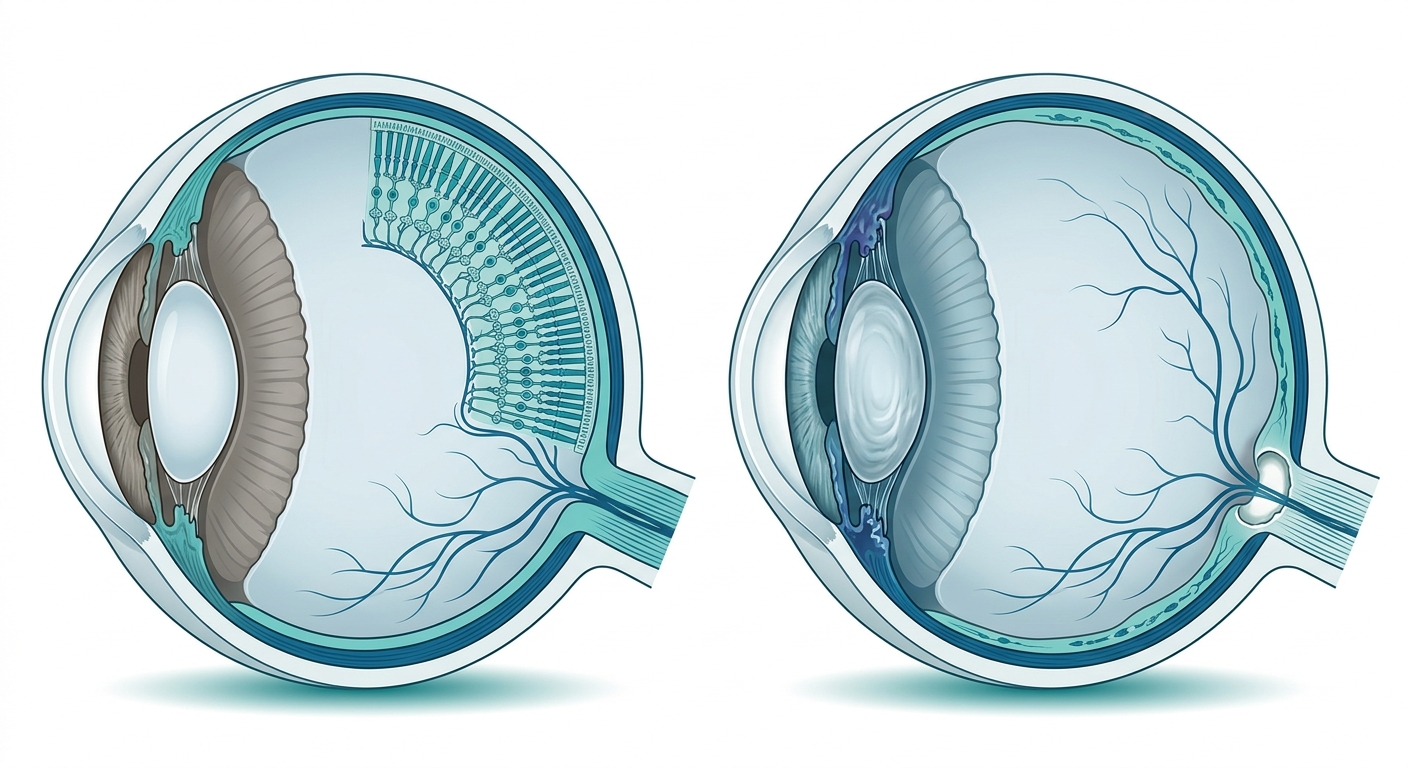
Glaucoma refers to a group of eye conditions that damage the optic nerve, the structure responsible for carrying visual information from your eye to your brain. In most cases, this damage is linked to elevated intraocular pressure, often simply called eye pressure, caused by a buildup of fluid inside the eye that does not drain properly. Over time, this pressure gradually damages optic nerve fibers, leading to permanent, irreversible vision loss if left untreated.
Early Symptoms of Glaucoma
The early symptoms of glaucoma are, frustratingly, often nonexistent. The most common form of the disease, open-angle glaucoma, progresses slowly and painlessly, typically starting with a loss of peripheral vision that most people do not notice until it has become significant, since the brain naturally compensates for gradual changes.
Signs of glaucoma to watch for, though they usually appear only in more advanced cases, include:
Patchy blind spots in your peripheral or central vision
Tunnel vision in advanced stages
Difficulty seeing in low light
Halos around lights, particularly at night
A different, less common type, angle-closure glaucoma, behaves very differently and can cause sudden, severe symptoms including intense eye pain, headache, nausea, blurred vision, and halos around lights. This version is a medical emergency and requires immediate treatment to prevent rapid vision loss.
Glaucoma Causes and Risk Factors
Glaucoma causes center around fluid drainage problems in the eye, but several risk factors make some people significantly more likely to develop the condition.
Risk Factor | Why It Matters |
|---|---|
Age over 60 | Risk increases substantially with age |
Family history | Glaucoma has a genetic component |
High eye pressure | The most significant modifiable risk factor |
Certain ethnic backgrounds | Some populations carry higher risk for specific glaucoma types |
Thin corneas | Associated with higher risk of optic nerve damage |
Diabetes or high blood pressure | Diabetes or high blood pressure |
Severe nearsightedness or farsightedness | Severe nearsightedness or farsightedness |
Open-Angle Glaucoma vs Angle-Closure Glaucoma
Understanding the difference between open-angle glaucoma and angle-closure glaucoma clarifies why symptoms and urgency vary so much between cases.
Open-angle glaucoma is the most common form. The drainage angle of the eye remains open, but fluid does not drain efficiently, causing pressure to build gradually over months or years. This form is almost always symptom free until noticeable vision loss occurs.
Angle-closure glaucoma happens when the drainage angle becomes blocked, causing pressure to rise rapidly. This can happen suddenly, producing severe symptoms, or gradually, producing a slower version with fewer warning signs.
Glaucoma Diagnosis, What a Comprehensive Eye Exam Involves
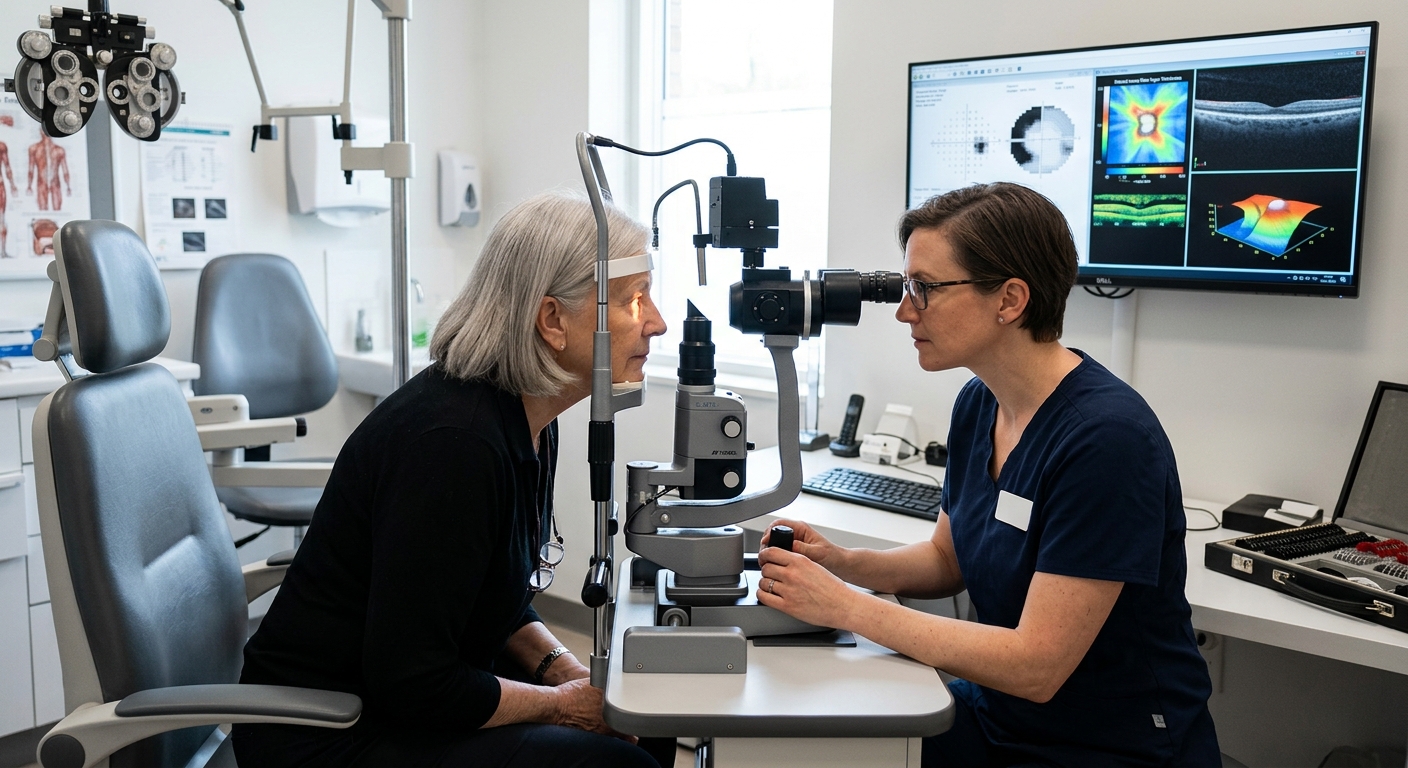
Because early stage glaucoma rarely announces itself, glaucoma diagnosis depends entirely on comprehensive eye examination, not on waiting for symptoms to appear. A thorough evaluation typically includes several tests.
Tonometry, measures eye pressure directly.
Optic nerve examination, the doctor examines the optic nerve's shape and color for signs of damage.
Visual field test, maps your peripheral vision to detect blind spots you may not have noticed.
Gonioscopy, examines the drainage angle of the eye to determine whether you have open-angle or angle-closure risk.
Optical coherence tomography, produces detailed cross-sectional images of the optic nerve and retina to detect subtle changes over time.
Regular glaucoma screening, particularly for anyone over 60 or with a family history, is the most reliable way to catch the disease early enough to preserve vision.
Glaucoma Treatment Options
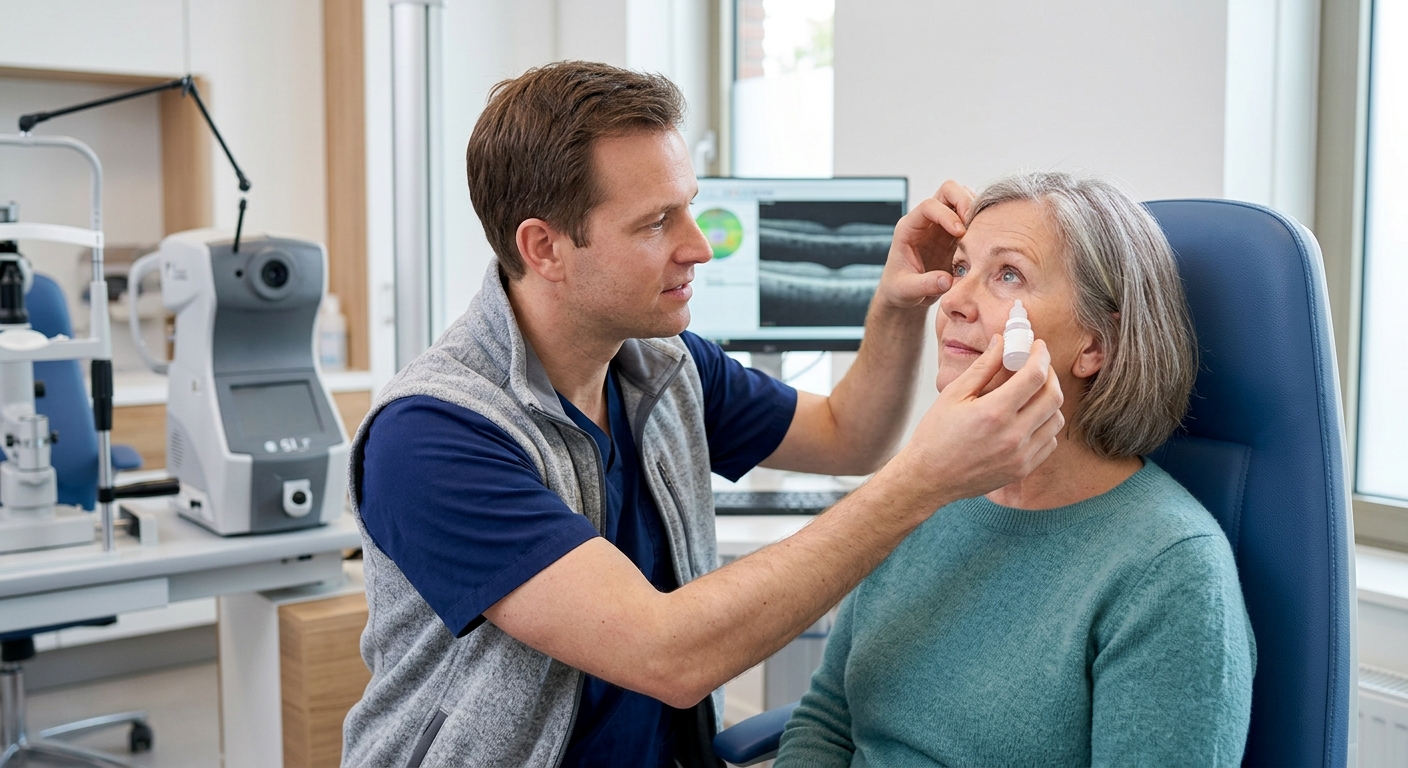
Glaucoma treatment focuses on lowering eye pressure to slow or stop further optic nerve damage, since vision already lost to glaucoma cannot currently be restored.
Prescription eye drops are usually the first line of treatment, working to either reduce fluid production in the eye or improve drainage.
Oral medications may be added in some cases to further lower eye pressure.
Laser treatment can improve fluid drainage or reduce fluid production, and is often used when drops alone are not enough.
Surgical procedures create new drainage pathways for fluid when other treatments have not sufficiently controlled pressure.
Treatment is typically lifelong, since glaucoma is a chronic condition that requires ongoing management rather than a one time fix.
Can Glaucoma Cause Blindness
This is one of the more urgent questions people search, can glaucoma cause blindness, and the honest answer is yes, if left undiagnosed or untreated. Glaucoma is one of the leading causes of irreversible blindness worldwide. The encouraging part is that with early diagnosis and consistent treatment, most people with glaucoma retain functional vision throughout their lives. The damage that has already occurred cannot be reversed, but further vision loss can usually be slowed significantly or stopped.
Conclusion
Glaucoma is dangerous precisely because it so rarely announces itself early on, with early symptoms of glaucoma typically absent until noticeable vision loss has already occurred in the most common form of the disease. Understanding your personal risk factors, particularly age, family history, and elevated eye pressure, makes a real difference in deciding how seriously to prioritize regular eye exams. Since glaucoma diagnosis relies on specific tests like tonometry and visual field testing rather than symptoms alone, routine comprehensive eye exams remain the single most effective way to catch this disease before it steals vision you cannot get back.
FAQ