
Medical Insights & Eye Health
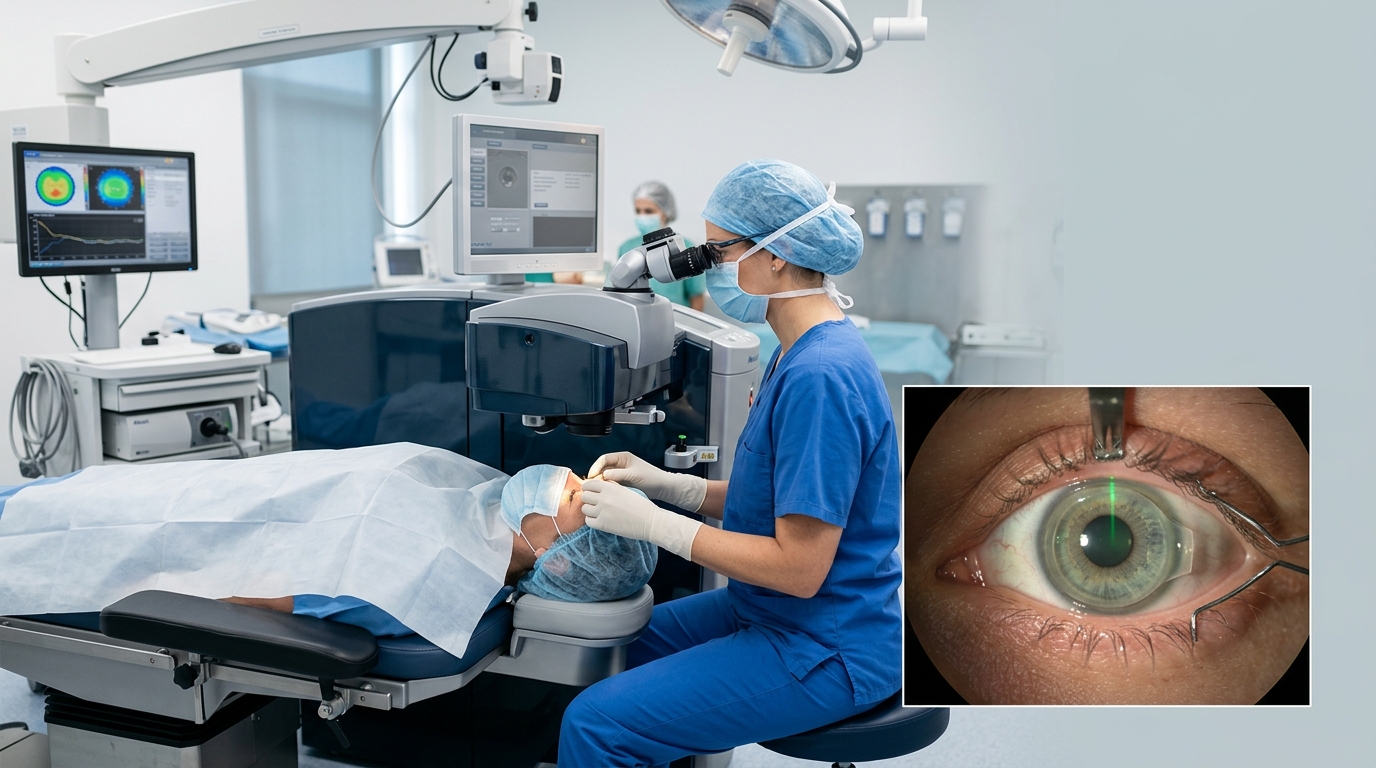
How Is LASIK Eye Surgery Done? Step-by-Step Procedure Explained
How Is LASIK Eye Surgery Done? Step-by-Step Procedure Explained
If you are considering vision correction surgery, you have probably wondered exactly how LASIK eye surgery is done and what actually happens once you are lying on the operating table. LASIK has become one of the most common elective procedures in the world, but the details of how it works are often glossed over in favor of vague marketing language. This guide walks through the real, step by step LASIK surgery process, from the pre-operative exam to the moment you walk out of the clinic.
What Does LASIK Eye Surgery Do
Before getting into the steps, it helps to understand what does LASIK eye surgery do at a basic level. LASIK, short for laser-assisted in situ keratomileusis, corrects refractive error by reshaping the cornea, the clear front surface of the eye. When light enters an eye with a refractive error like myopia, hyperopia, or astigmatism, it does not focus precisely on the retina, which is why vision appears blurry. By precisely reshaping the cornea, LASIK changes how light bends as it enters the eye, allowing it to focus correctly without the need for glasses or contact lenses in most patients
The Pre-Operative Eye Examination Every LASIK journey starts well before the actual surgery, with a detailed pre-operative eye examination. This is not optional, it is the step that determines whether you are actually a good candidate for the procedure.
Assessment | What It Checks |
|---|---|
Corneal topography | Maps the shape and thickness of the cornea |
Pupil size measurement | Assesses how the eye responds in different lighting |
Refraction test | Measures your exact prescription and degree of refractive error |
Overall eye health check | Rules out conditions like keratoconus or active infection |
Your ophthalmologist uses this data to confirm your corneas are thick enough and healthy enough for safe reshaping, and to plan the exact correction your eyes need.
Steps of LASIK Surgery
Here is the steps of LASIK surgery breakdown, in the order they actually happen during your appointment.
Numbing the eye. Anesthetic eye drops are applied so you do not feel pain during the procedure, though you may feel some pressure.
Stabilizing the eye. A small instrument called a lid speculum gently holds your eyelids open so you do not need to worry about blinking.
Creating the corneal flap. A thin, hinged flap is created on the surface of the cornea using either a mechanical microkeratome or, more commonly today, a femtosecond laser.
Lifting the flap. The surgeon gently folds back the corneal flap to expose the underlying corneal tissue.
Reshaping the cornea. An excimer laser removes microscopic amounts of corneal tissue in a precise, pre-programmed pattern based on your exact prescription, a process known as corneal reshaping.
Repositioning the flap. The flap is laid back into place, where it naturally adheres without stitches within minutes.
Final check. The surgeon verifies the flap is properly positioned before you move to a brief recovery area.
The entire procedure for both eyes usually takes somewhere between ten and twenty minutes, with the laser portion itself lasting only a matter of seconds per eye.
How Laser Eye Surgery Is Done Differently Across Techniques
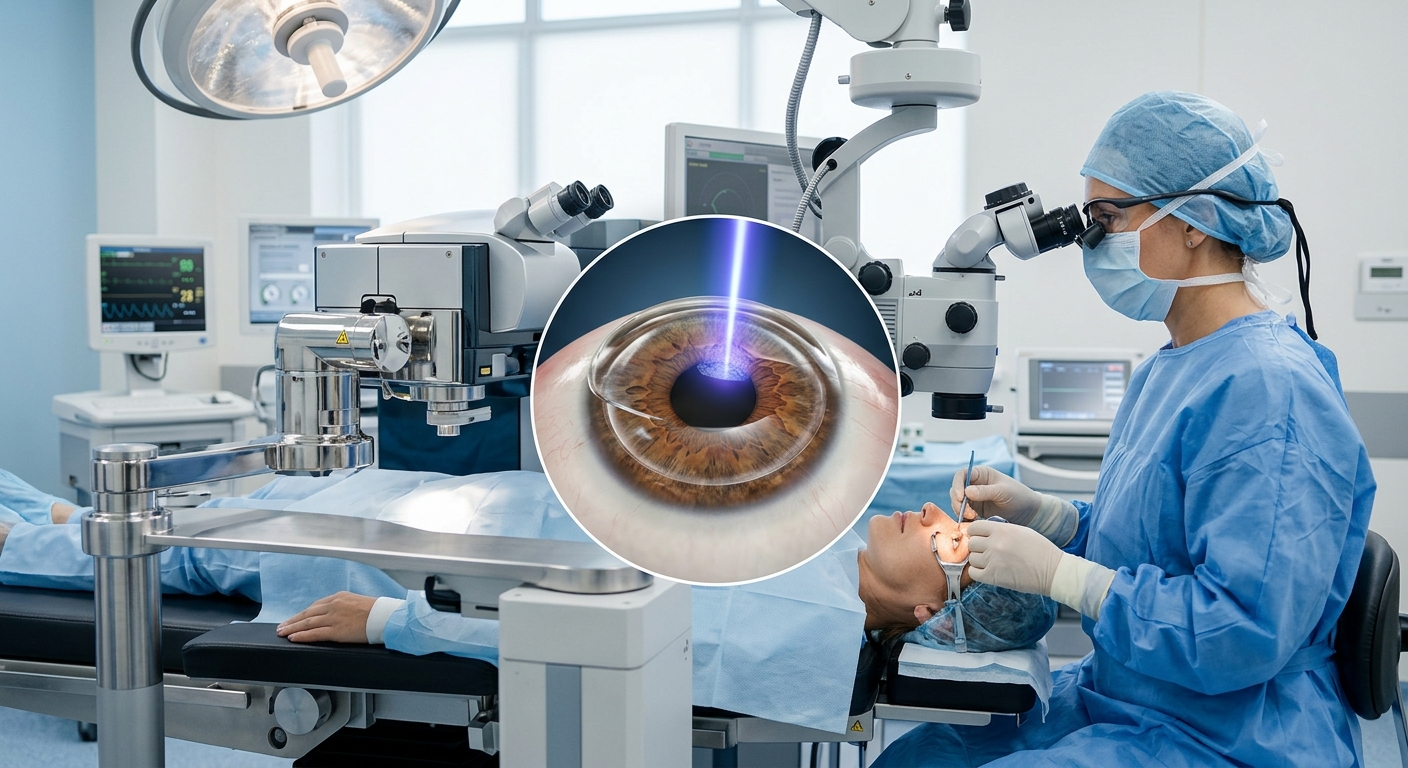
Patients researching how laser eye surgery is done often come across different technique names and assume they are entirely different procedures. In reality, most modern approaches follow the same core structure described above, with variations mainly in how the corneal flap is created or whether a flap is created at all. Surface based techniques, for example, reshape the very outer layer of the cornea without creating a flap, which can suit patients with thinner corneas, though recovery tends to take a few days longer.
How LASIK Surgery Works to Correct Different Refractive Errors
Understanding how LASIK surgery works for your specific vision issue helps set realistic expectations.
For myopia, or nearsightedness, the laser flattens the central cornea.
For hyperopia, or farsightedness, the laser steepens the central cornea.
For astigmatism, the laser smooths out irregularities in the cornea's curved shape so light focuses evenly.
Your surgeon programs the laser with your exact measurements, so the correction is customized rather than a one size fits all adjustment.
What Happens Right After the LASIK Eye Surgery Procedure
Once the LASIK eye surgery procedure is complete, most patients rest with their eyes closed for a short period at the clinic before heading home, ideally with someone else driving. Mild irritation, light sensitivity, and watery eyes are common in the first few hours, along with a gritty sensation as the numbing drops wear off.
LASIK Recovery Timeline
LASIK recovery generally follows a predictable pattern, though individual healing varies.
First 24 hours, vision is often blurry or hazy, light sensitivity is common, protective eye shields are usually worn while sleeping.
Days 2 to 7, vision noticeably sharpens for most patients, mild dryness and occasional glare or halos around lights at night may persist.
Weeks 2 to 4, most patients reach close to their final visual outcome, with a follow up appointment to confirm healing is on track.
Months 1 to 3, any residual dryness or minor fluctuations typically resolve, and vision stabilizes fully.
Follow up appointments with your ophthalmologist during this period are important, since they confirm the flap has healed properly and your vision correction is holding as expected.
Conclusion
LASIK eye surgery follows a precise, well established sequence, starting with a thorough pre-operative eye examination, followed by numbing, creating and lifting a corneal flap, reshaping the cornea with an excimer laser, and repositioning the flap, all completed in a matter of minutes. Understanding how LASIK eye surgery is done step by step can make the process feel far less intimidating, and recovery for most patients is faster than commonly assumed, with clear vision often noticeable within the first few days. As with any procedure, the right outcome depends on a proper evaluation with a qualified ophthalmologist who can confirm you are a suitable candidate before moving forward.
FAQ