
Medical Insights & Eye Health

LASIK Surgery vs Glasses: Which Vision Correction Option Is Right for You
LASIK Surgery vs Glasses: Which Vision Correction Option Is Right for You?
Anyone who has worn corrective lenses for years has probably weighed LASIK surgery vs glasses at some point, usually right after fogging up their lenses at the worst possible moment. Both are effective, well established ways to manage refractive errors, but they work in fundamentally different ways and suit different lifestyles.
The Core Difference Between the Two Approaches
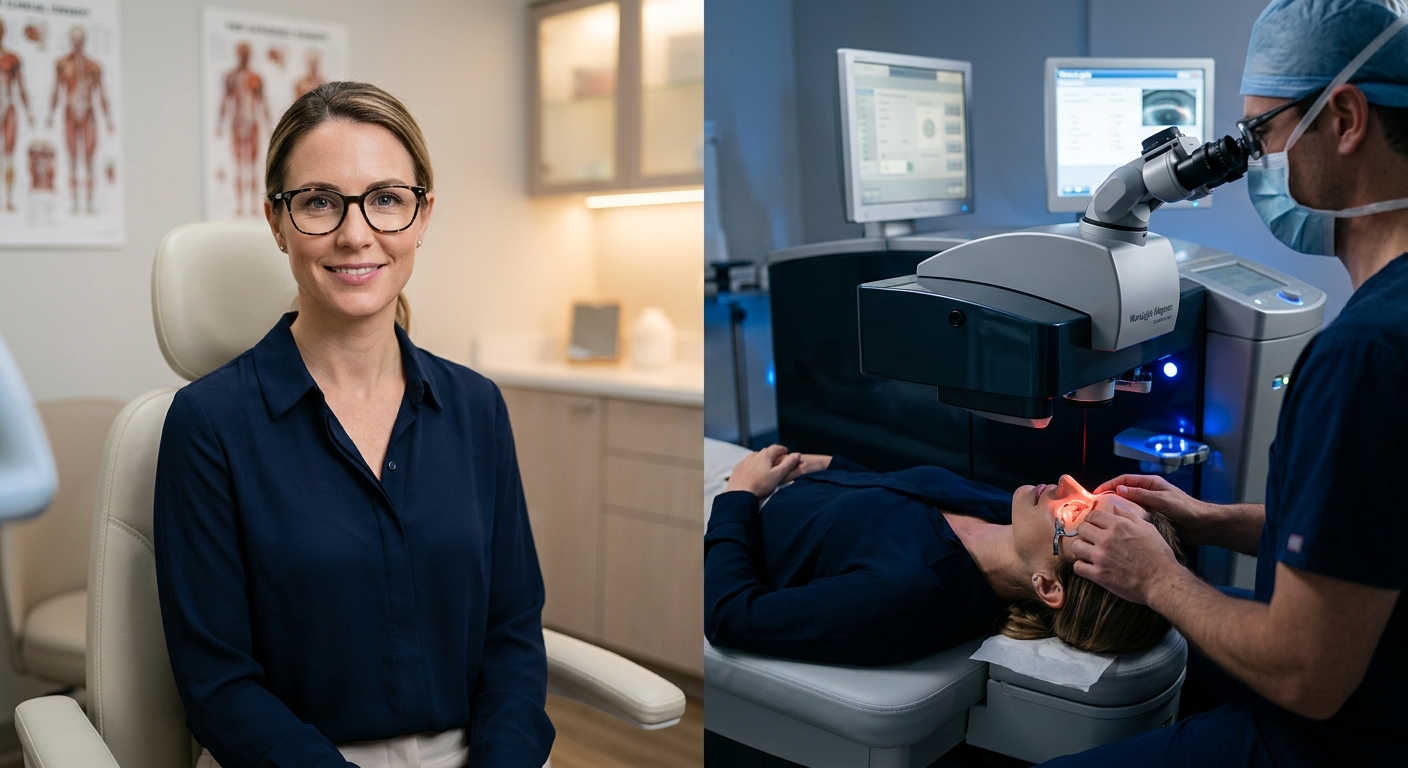
Vision correction through glasses works by placing a corrective lens in front of the eye, bending light before it enters so it focuses correctly on the retina. LASIK, a form of laser vision correction, works by permanently reshaping the cornea itself, so the eye focuses light correctly on its own without an external lens. One approach is external and reversible, the other is internal and permanent.
LASIK vs Glasses: A Side by Side Comparison
Factor | LASIK | Glasses |
|---|---|---|
Upfront cost | Higher one time cost | Lower upfront cost |
Ongoing cost | Minimal after healing | Recurring, prescriptions change over time |
Daily convenience | No lenses to manage | Requires wearing and maintaining lenses |
Reversibility | Permanent | Fully reversible, easy to update |
Vision when active | Unaffected by sport or weather | Can fog, slip, or break during activity |
Recovery required | Days to weeks | None |
Eligibility | Requires specific eye criteria | Available to almost everyone |
Neither column is objectively better, the right choice depends entirely on which trade offs matter most to you.
Benefits of LASIK Over Glasses
The most commonly cited benefits of LASIK over glasses center on convenience and lifestyle. Once healed, most LASIK patients no longer need any corrective lens for daily tasks like driving, reading, or working. This matters most for people with active lifestyles, since laser eye surgery vs glasses comparisons consistently show that athletes, swimmers, and people in humid or dusty work environments benefit from not having a physical lens to manage.
There is also a cosmetic and practical factor some patients do not initially consider, glasses can restrict peripheral vision slightly, fog up with temperature changes, and need frequent cleaning, none of which apply once LASIK has fully healed.
Should I Get LASIK or Wear Glasses
If you are asking yourself should I get LASIK or wear glasses, a few honest questions can help clarify the decision.
Does your visual acuity interfere with your work, sport, or daily comfort in a way glasses cannot solve?
Are you comfortable with a one time cost in exchange for reduced daily maintenance going forward?
Has your prescription been stable for at least a year, since LASIK is designed for stable refractive errors?
Do you have any eye health concerns, like significant dry eye or thin corneas, that might make you a poor surgical candidate?
Would you rather keep the option to change your correction instantly as your eyes age, which glasses allow more easily?
There is no universally correct answer here. Someone with a physically demanding job and a stable prescription often leans toward LASIK, while someone whose prescription is still changing, or who simply prefers to avoid elective surgery, often sticks with glasses.
LASIK Eligibility: What Determines If You Qualify
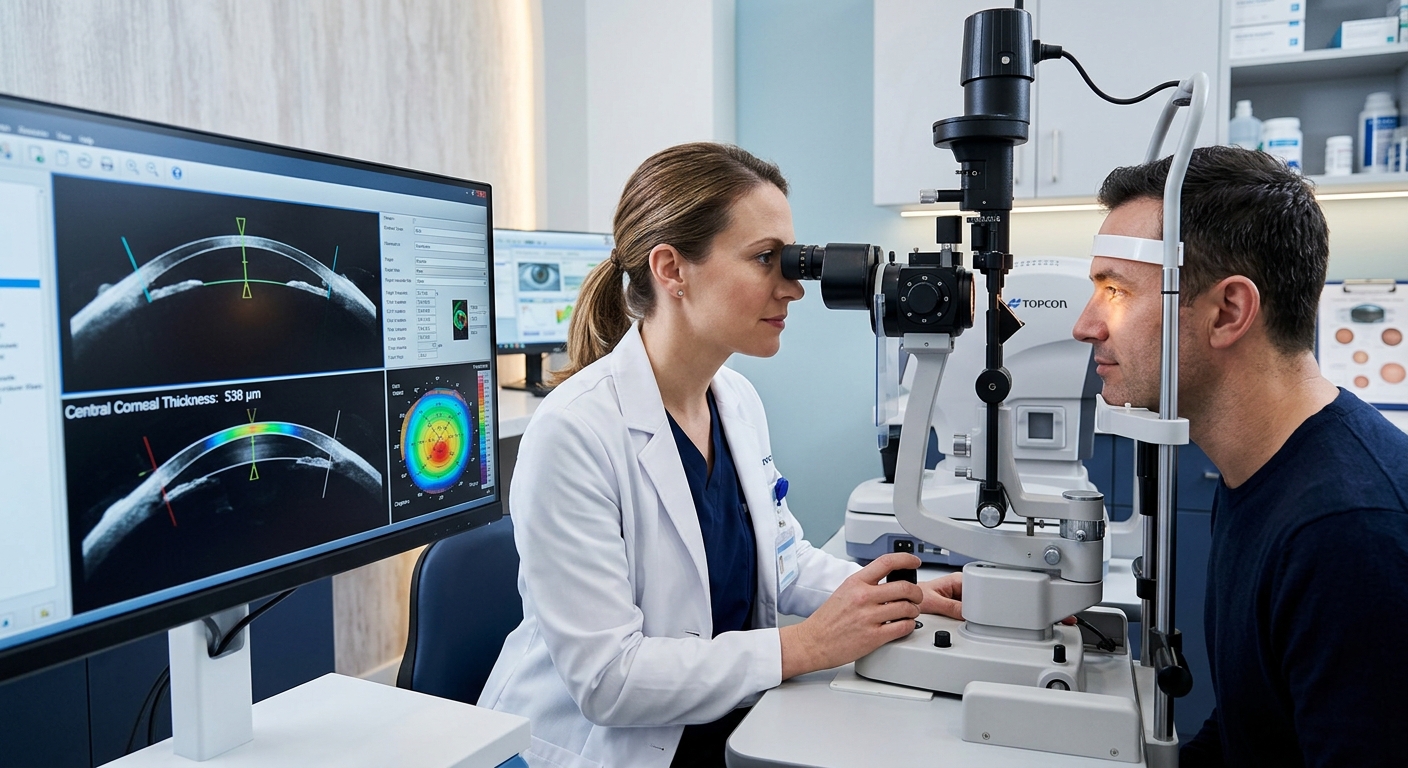
LASIK eligibility is not just a matter of preference, it is a clinical determination based on several factors checked during a pre-surgical eye examination.
Corneal thickness must be sufficient to safely remove tissue during reshaping.
Your prescription should have been stable for roughly the past year.
You should be free of certain eye conditions, like keratoconus or significant dry eye disease.
Age matters too, most surgeons prefer candidates to be at least eighteen to twenty five, since vision can still be changing before that.
If you do not meet the criteria for LASIK, that does not mean vision correction options are limited to traditional glasses. Other laser or lens based procedures may still be available depending on your specific eye anatomy, which your ophthalmologist can walk you through.
Thinking About Cost Over Time
A useful way to compare LASIK eye surgery vs glasses financially is to think beyond the sticker price. Glasses involve recurring costs, new frames, updated lenses as prescriptions change, and replacements when they break or get lost. LASIK involves a larger upfront cost but minimal ongoing expense afterward for most patients. Over a decade or more, the total cost can end up fairly comparable depending on how often your prescription changes and how you care for your glasses or contacts.
Conclusion

Choosing between LASIK surgery vs glasses comes down to your lifestyle, your eligibility, and how you personally weigh a larger upfront cost and short recovery against years of daily lens maintenance. LASIK offers freedom from corrective lenses for most patients once healed, while glasses remain a flexible, reversible, and universally accessible option with zero surgical risk. Neither is the wrong choice. The best decision comes from an honest conversation with an eye care professional about your prescription stability, corneal health, and what actually matters most in your day to day life.
FAQ